01 · Gender & Politics 02 · Religion, Communalism & Secularism 03 · Caste & Politics Key Terms & Definitions NCERT Exercise Solutions Interactive Quiz Rapid Revision ← All Chapters Navigator
NCERT · Democratic Politics-II · Reprint 2026-27 · Pages 29-45

Gender, Religion & Caste

Chapter 3, line by line — decoded. Every paragraph of the NCERT textbook, explained in plain language with real data, constitutional provisions, reformers, timelines and an exam-ready quiz. Social diversity doesn't threaten democracy — let's understand why.

0
Textbook pages decoded
0
Exercise solutions
0%
Women in 17th Lok Sabha
0+
Random quiz questions
Overview · Page 29

One chapter, three social divisions

Before diving in, the NCERT sets the stage in a single opening paragraph. Read the original lines, then the plain-English decoding beneath each block — that's the format of this whole guide.

01

The existence of social diversity does not threaten democracy. Political expression of social differences is possible and sometimes quite desirable in a democratic system.

India is a land of many communities — and that's a strength, not a weakness. In a democracy, different groups are free to raise their voice. Sometimes this clash of voices is exactly what a healthy democracy needs: it forces society to confront injustice instead of hiding it.
02

In this chapter we apply these ideas to the practice of democracy in India. We look at three kinds of social differences that can take the form of social divisions and inequalities. These are social differences based on gender, religion and caste.

The chapter studies gender, religion and caste — three identities every Indian carries. Each can stay a harmless difference, or harden into a division (us vs. them) and an inequality (some treated worse than others).

Key distinction A difference is just variety — it becomes a division only when one side is ranked above another.
03

In each case we look at the nature of this division in India and how it gets expressed in politics. We also ask whether different expressions based on these differences are healthy or otherwise in a democracy.

The core exam question of this chapter: when social identity enters politics, is the result good or bad for democracy? Answer: it depends. Gender politics (feminist movements) brought women rights — largely positive. Religious politics (communalism) brought riots — largely negative. Caste politics does both.

Positive expression

Gender & Politics

Why housework is political, what feminist movements won, and the long road to women's representation — from 0% to 14.36% to the 2023 Reservation Act.

Negative expression

Religion & Communalism

When religion becomes the basis of the nation, democracy is in danger. The four forms of communal politics and India's constitutional answer: the secular state.

Both sides

Caste & Politics

India's unique hereditary hierarchy — how it was broken down, why it persists, and the fine line between caste as empowerment and caste as vote bank.

Part 1 · Pages 30-35

Gender & Politics

The chapter opens with the most universal division of all — one that exists in every society yet is "rarely recognised in the study of politics". Here's every argument, statistic and constitutional answer, decoded line by line.

1.1

Let us begin with gender division. This is a form of hierarchical social division seen everywhere, but is rarely recognised in the study of politics. The gender division tends to be understood as natural and unchangeable. However, it is not based on biology but on social expectations and stereotypes.

The biggest myth this paragraph smashes: that "women belong inside the home" is natural. It is not biology — it is social conditioning. What society expects from "a woman" differs across countries and eras, which proves it's made by society, and can be changed by society.

Gender division

A hierarchical (ranked, unequal) division of society based on social expectations about what men and women should do — not on biological difference.

1.2

Boys and girls are brought up to believe that the main responsibility of women is housework and bringing up children. This is reflected in a sexual division of labour in most families: women do all work inside the home such as cooking, cleaning, washing clothes, tailoring, looking after children, etc., and men do all the work outside the home.

Note the phrase "brought up to believe" — the division is taught, not inborn. This is the textbook definition of the sexual division of labour and the public/private split.

Sexual division of labour

A system in which all work inside the home is either done by the women of the family, or organised by them through domestic helpers.

NCERT margin question "Why are we discussing household work in a Political Science textbook?" — Because politics is about power, and male dominance inside the household is a power relation too.
1.3

It is not that men cannot do housework; they simply think that it is for women to attend to these things. When these jobs are paid for, men are ready to take up these works. Most tailors or cooks in hotels are men. Similarly, it is not that women do not work outside their home. In villages, women fetch water, collect fuel and work in the fields. In urban areas, poor women work as domestic helper in middle class homes, while middle class women work in offices. In fact, the majority of women do some sort of paid work in addition to domestic labour. But their work is not valued and does not get recognition.

Two brilliant reversals in one paragraph: (1) Men do cook and stitch — as soon as it's paid (hotel chefs, tailors). So the "natural" boundary is really about money and prestige. (2) Women always worked outside — in fields, as domestic workers, in offices. The double burden is the norm: paid work plus unpaid housework.

Exam point "A woman works one hour more than a man every day, yet much of her work is unpaid and therefore not valued" — a favourite one-liner for "How is women's work undervalued?"
1.4

The result of this division of labour is that although women constitute half of the humanity, their role in public life, especially politics, is minimal in most societies. Earlier, only men were allowed to participate in public affairs, vote and contest for public offices. Gradually the gender issue was raised in politics. Women in different parts of the world organised and agitated for equal rights. There were agitations in different countries for the extension of voting rights to women.

Half of humanity → a fraction of public power. The moment women's groups politicised the private sphere, change began — first the vote, then education, then office. Politics didn't create gender inequality, but political agitation is what dismantled it.

1.5

These agitations demanded enhancing the political and legal status of women and improving their educational and career opportunities. More radical women's movements aimed at equality in personal and family life as well. These movements are called feminist movements.

Definition moment. Some movements asked for the vote and jobs; feminist movements went further — equality inside the family and personal life too.

Feminist

A woman or a man who believes in equal rights and opportunities for women and men.

Patriarchy

Literally "rule by father" — a system that values men more and gives them power over women.

1.6

Political expression of gender division and political mobilisation on this question helped to improve women's role in public life. We now find women working as scientists, doctors, engineers, lawyers, managers and college and university teachers which were earlier not considered suitable for women. In some parts of the world, for example in Scandinavian countries, such as Sweden, Norway and Finland, the participation of women in public life is very high.

Proof that politics works: professions once "unsuitable" for women are now open, and in Scandinavian countries (Sweden, Norway, Finland) women's public participation is among the world's highest — showing the "natural" ceiling was never natural at all.

1.7

In our country, women still lag much behind men despite some improvement since Independence. Ours is still a male-dominated, patriarchal society. Women face disadvantage, discrimination and oppression in various ways: The literacy rate among women is only 54 per cent compared with 76 per cent among men. Similarly, a smaller proportion of girl students go for higher studies.

India's report card, four fronts. First: education — a 22-point literacy gap (54% vs 76%). Girls often outperform boys in school results but drop out, because parents prefer to spend scarce resources on sons' education.

Why girls drop out Not marks — money. Parents "prefer to spend resources for their boys' education rather than spending equally on sons and daughters."
1.8

The Equal Remuneration Act, 1976 provides that equal wages should be paid to equal work. However in almost all areas of work, from sports and cinema, to factories and fields, women are paid less than men, even when both do exactly the same work.

Second front: pay. The law says equal wages for equal work; reality says otherwise — across sports, cinema, factories and fields, women earn less for identical work. Law on paper ≠ equality in practice.

1.9

In many parts of India, parents prefer to have sons and find ways to have the girl child aborted before she is born. Such sex-selective abortion led to a decline in child sex ratio (number of girl children per thousand boys) in the country to merely 919. As the map shows, this ratio has fallen below 850 or even 800 in some States.

Third and most chilling front: existence itself. Son preference + sex-selective abortion = child sex ratio of just 919 girls per 1000 boys (Census 2011) — below 850 or even 800 in some states. Fewer girls born means fewer women in the next generation.

1.10

There are reports of various kinds of harassment, exploitation and violence against women. Urban areas have become particularly unsafe for women. They are not safe even within their own home from beating, harassment and other forms of domestic violence.

Fourth front: safety — harassment outside, domestic violence inside. The tragedy the NCERT underlines: a woman may be unsafe even in her own home.

Exercise Q1 ready-made The four disadvantages: (1) education/literacy gap, (2) unequal pay, (3) declining child sex ratio, (4) harassment & violence. Memorise as a 4-point list.
Data focus · Page 32

The Time-Use Survey — inequality, measured in hours

The Government of India tracked how men and women in six states spent every hour of the day. The result is the chapter's most quotable dataset.

Daily time use — hours : minutes (Govt. of India, Time-Use Survey 1998-99)
ActivityMenWomenShare of day
Income generating work6:002:40
Household & related work0:305:00
Talking, gossip1:251:20
No work / leisure3:403:50
Sleep, self-care, reading12:2511:10

Bars scaled to a 16-hour waking day for visual comparison. Source: Government of India, Time Use Survey, 1998-99.

What the data says The average woman works ~7.5 hours a day, the average man ~6.5 — she works one hour more. Yet his work counts (it earns money) and hers largely doesn't. Her labour is unpaid and invisible.
Pages 34-35

Women's political representation

"Unless women control power, their problems will not get adequate attention." The chapter now turns from society to the state — who sits in the legislatures?

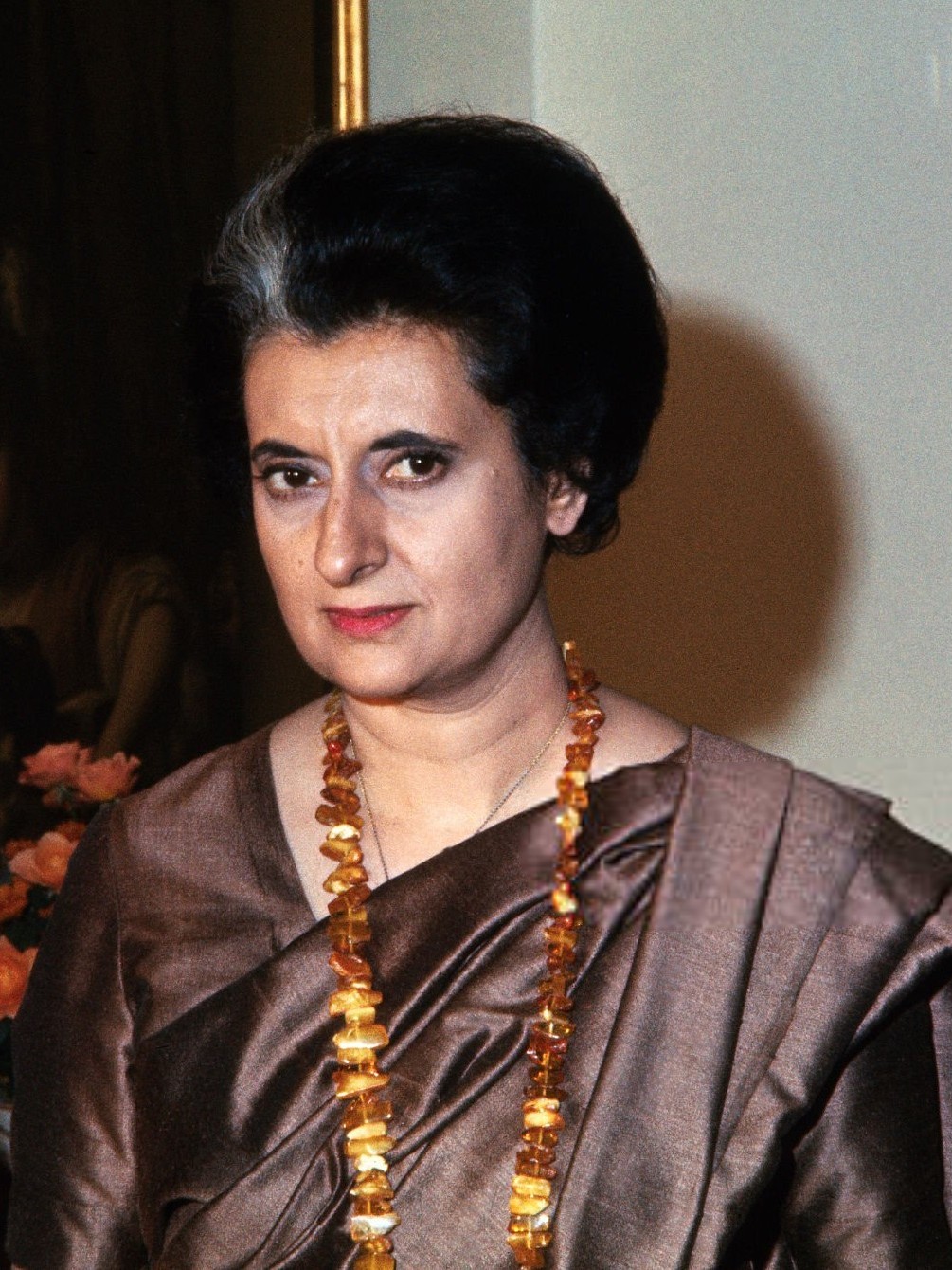
Portrait of Indira Gandhi, India's first and only woman Prime Minister
Indira Gandhi — India's first woman PM (1966). Yet cabinets remain largely all-male even when a woman leads.
1.11

All this is well known. Yet issues related to women's well being or otherwise are not given adequate attention. This has led many feminists and women's movements to the conclusion that unless women control power, their problems will not get adequate attention. One way to ensure this is to have more women as elected representatives.

The feminist logic of representation: problems of half the population can't wait for the goodwill of the other half. Power sharing is the guarantee, not charity.

1.12

In India, the proportion of women in legislature has been very low. For example, the percentage of elected women members in Lok Sabha has touched 14.36 per cent of its total strength for the first time in 2019. Their share in the state assemblies is less than 5 per cent. In this respect, India is among the bottom group of nations in the world... India is behind the averages for several developing countries of Africa and Latin America.

The hard numbers: 14.36% in the 17th Lok Sabha (2019) — a first-time high. Under 5% in state assemblies. Globally, India sits in the bottom group, behind many African and Latin American developing countries.

Women in national parliaments — world regions (%)

Directly elected houses, as on 1 October 2018 · Source: IPU (archive.ipu.org)

Nordic countries42.3
Americas29.5
Europe (OSCE)26.4
Sub-Saharan Africa23.7
World average19.8
Asia18.6
Arab States15.6
India (Lok Sabha)11.8*

*India's 11.8% is the IPU-2018 figure for the 16th Lok Sabha; the 2019 election first touched 14.36%. Bars scaled to 45% for visual comparison.

1.13

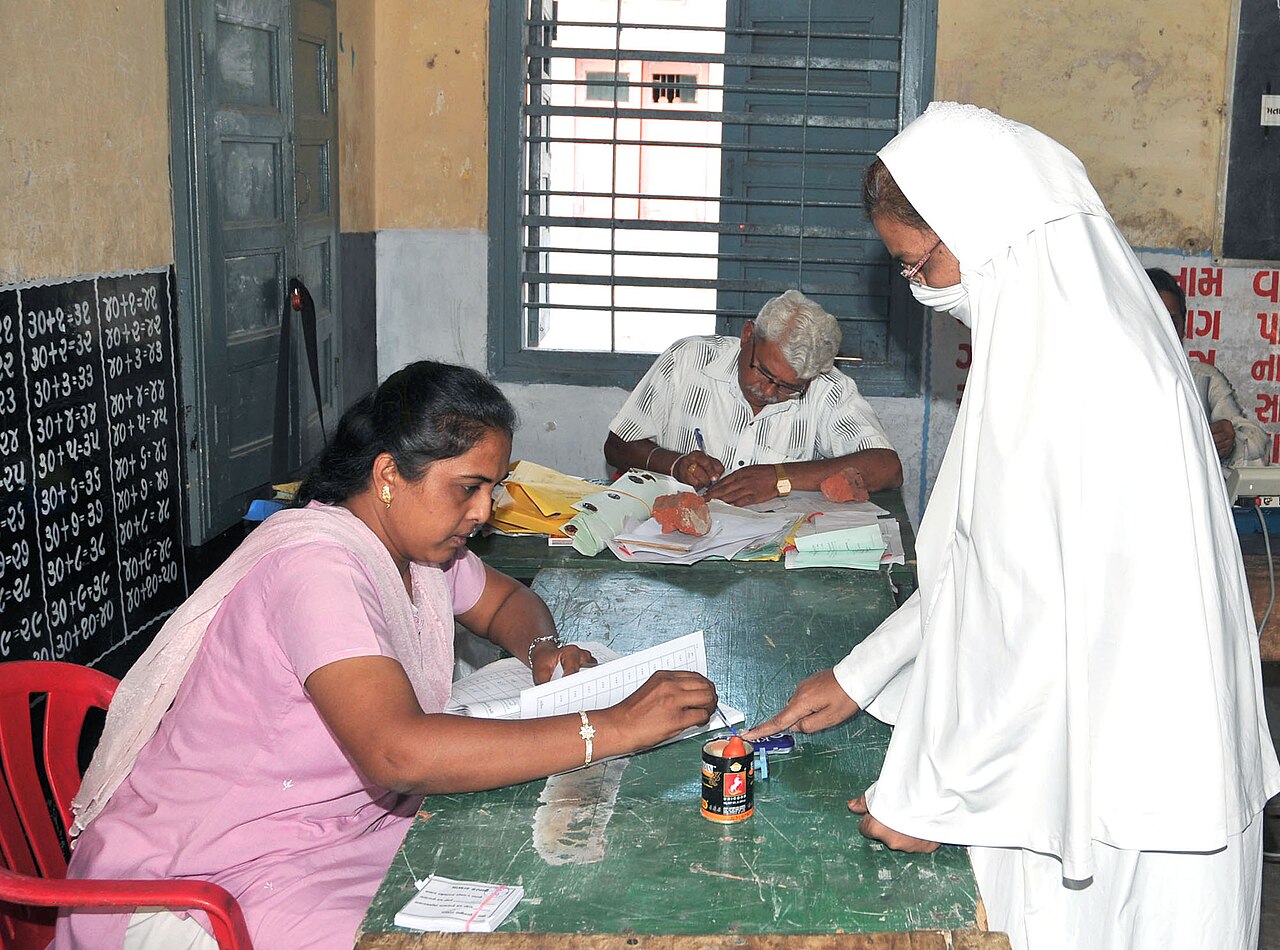
One way to solve this problem is to make it legally binding to have a fair proportion of women in the elected bodies. This is what the Panchayati Raj has done in India. One-third of seats in local government bodies — in panchayats and municipalities — are now reserved for women. Now there are more than 10 lakh elected women representatives in rural and urban local bodies.

India's home-grown fix: legal reservation. One-third of all panchayat and municipality seats are reserved for women — producing over 10 lakh (1 million) elected women representatives today. That's the world's largest experiment in women's political representation.

1.14

Women's organizations and activists had been demanding a similar reservation of at least one-third of seats in Lok Sabha and State Assemblies for women. A bill with this proposal was pending before the Parliament for many decades. In 2023, Nari Shakti Vandan Adhiniyam (Women's Reservation Act, 2023) has been passed which will give 33 percent reservation of seats for women in Lok Sabha, State Legislative Assemblies and also Delhi Assembly.

The update in your 2026-27 reprint: after decades of pending, the Nari Shakti Vandan Adhiniyam (2023) finally passed — 33% reservation for women in the Lok Sabha, all State Assemblies and the Delhi Assembly.

1996 → 2010
The Women's Reservation Bill is introduced — again and again

Proposals to reserve one-third of Lok Sabha and Assembly seats for women were introduced repeatedly but lapsed with each Lok Sabha dissolution.

2010
Rajya Sabha passes the bill

The upper house cleared it, but it never came to a vote in the Lok Sabha.

21 September 2023
Nari Shakti Vandan Adhiniyam becomes law

33% reservation for women in Lok Sabha, State Legislative Assemblies and the Delhi Assembly — taking effect after the next census and delimitation exercise.

1.15

Gender division is an example that some form of social division needs to be expressed in politics. This also shows that disadvantaged groups do benefit when social divisions become a political issue. Do you think that women could have made the gains we noted above if their unequal treatment was not raised in the political domain?

The section's verdict — and the chapter's thesis in miniature: the vote, the laws, the 10 lakh panchayat seats, the 2023 Act — none of it arrived without political struggle. Social division, expressed politically, was the vehicle of justice. Gender politics here is a good thing.

Exam point "Disadvantaged groups benefit when social divisions become a political issue" — quote this to argue that political expression of gender division is healthy for democracy.
Part 2 · Pages 36-38

Religion, Communalism & Secularism

The second division is not universal like gender, but "religious diversity is fairly widespread". The key skill of this section: telling healthy religion-in-politics apart from communal religion-in-politics.

2.1

Let us now turn to a very different kind of social division, the division based on religious differences. This division is not as universal as gender, but religious diversity is fairly widespread in the world today. Many countries including India have in their population, followers of different religions. As we noticed in the case of Northern Ireland, even when most of the people belong to the same religion, there can be serious differences about the way people practice that religion. Unlike gender differences, the religious differences are often expressed in the field of politics.

Two sharp observations: religious division is less universal than gender (many nations are religiously homogeneous), and even one religion can split bitterly over how it is practised (Northern Ireland: Protestants vs. Catholics — same religion, deep division). And unlike gender, religion shows up in politics openly and often.

2.2

Gandhiji used to say that religion can never be separated from politics. What he meant by religion was not any particular religion like Hinduism or Islam but moral values that inform all religions. He believed that politics must be guided by ethics drawn from religion.

Read carefully — this is not communalism. Gandhiji's "religion" = moral values common to all faiths (truth, non-violence, compassion). Politics guided by ethics, not by any single faith's dominance. A favourite source of confusion in MCQs.

Family laws

Laws dealing with family matters — marriage, divorce, adoption, inheritance. In India, different family laws apply to followers of different religions.

2.3

Human rights groups in our country have demanded that the Government should take special steps to prevent communal riots and protect religious minorities. Women's movement has argued that family laws of all religions discriminate against women. So they have demanded that government should change these laws to make them more equitable.

Two more examples of legitimate religion-politics contact: rights groups demanding state protection of minorities, and the women's movement demanding equitable family laws across all religions. Note the pattern — here politics regulates religion to prevent injustice.

2.4

All these instances involve a relationship between religion and politics. But they do not seem very wrong or dangerous. Ideas, ideals and values drawn from different religions can and perhaps should play a role in politics. People should be able to express in politics their needs, interests and demands as a member of a religious community. Those who hold political power should sometimes be able to regulate the practice of religion so as to prevent discrimination and oppression. These political acts are not wrong as long as they treat every religion equally.

The litmus test, stated in one line: as long as every religion is treated equally, the mixing of religion and politics is legitimate — even desirable. Values may inspire; communities may voice needs; the state may regulate to prevent oppression. Equality is the boundary between healthy and communal.

2.5

The problem begins when religion is seen as the basis of the nation... The problem becomes more acute when religion is expressed in politics in exclusive and partisan terms, when one religion and its followers are pitted against another. This happens when beliefs of one religion are presented as superior to those of other religions, when the demands of one religious group are formed in opposition to another and when state power is used to establish domination of one religious group over the rest. This manner of using religion in politics is communal politics.

Now the boundary is crossed: religion as the basis of the nation, one faith pitted against another, beliefs ranked as superior, and — worst — state power used for religious domination. That is communal politics.

Communalism

The belief that religion is the principal basis of social community — that followers of one religion belong together, share the same interests, and cannot share community with followers of other religions.

2.6

Communalism involves thinking along the following lines. The followers of a particular religion must belong to one community. Their fundamental interests are the same. Any difference that they may have is irrelevant or trivial for community life. It also follows that people who follow different religions cannot belong to the same social community. If the followers of different religions have some commonalities these are superficial and immaterial, their interests are bound to be different and involve a conflict. In its extreme form, communalism leads to the belief that people belonging to different religions cannot live as equal citizens within one nation. Either, one of them has to dominate the rest or they have to form different nations.

The anatomy of the communal mind, in four steps: one religion = one community → same interests, internal differences trivial → different religions = enemies in waiting → in the extreme, equal citizenship is impossible: dominate, or split into separate nations (Partition logic).

Why the belief is "fundamentally flawed" People of one religion do not share all interests — a rich Hindu and a poor Hindu differ more economically than two poor families of different faiths. Everyone has multiple identities (class, region, language, gender). "There are many voices inside every community."
2.7

Communalism can take various forms in politics: The most common expression of communalism is in everyday beliefs. These routinely involve religious prejudices, stereotypes of religious communities and belief in the superiority of one's religion over other religions... A communal mind often leads to a quest for political dominance of one's own religious community. For those belonging to majority community, this takes the form of majoritarian dominance. For those belonging to the minority community, it can take the form of a desire to form a separate political unit. Political mobilisation on religious lines is another frequent form of communalism. This involves the use of sacred symbols, religious leaders, emotional appeal and plain fear... Sometimes communalism takes its most ugly form of communal violence, riots and massacre. India and Pakistan suffered some of the worst communal riots at the time of the Partition.

The four forms of communalism in politics — memorise this ladder, it goes from mild to monstrous:

The four forms of communal politics
#FormWhat it looks like
1Everyday beliefsPrejudices, stereotypes, "my religion is superior" — so common we often fail to notice it, even when we believe it
2Quest for dominanceMajority community → majoritarian dominance; minority community → desire for a separate political unit
3Political mobilisation on religious linesSacred symbols, religious leaders, emotional appeal, plain fear — special appeal to one religion's voters
4Communal violenceRiots and massacre — the ugliest form; Partition-era India and Pakistan saw the worst
Exercise Q2 ready-made "State different forms of communal politics with one example each" — the table above is the answer.
2.8

Communalism was and continues to be one of the major challenges to democracy in our country. The makers of our Constitution were aware of this challenge. That is why, they chose the model of a secular state. This choice was reflected in several constitutional provisions that we studied last year: There is no official religion for the Indian state. Unlike the status of Buddhism in Sri Lanka, that of Islam in Pakistan and that of Christianity in England, our Constitution does not give a special status to any religion. The Constitution provides to all individuals and communities freedom to profess, practice and propagate any religion, or not to follow any. The Constitution prohibits discrimination on grounds of religion. At the same time, the Constitution allows the state to intervene in the matters of religion in order to ensure equality within religious communities. For example, it bans untouchability.

The constitutional answer to communalism — the secular state, built on four pillars. Compare: Sri Lanka gives Buddhism special status, Pakistan privileges Islam, England has Christianity — India gives no religion official status.

India's secular state — the four constitutional provisions
#ProvisionMeaning
1No official religionUnlike Sri Lanka (Buddhism), Pakistan (Islam) or England (Christianity), no faith has special constitutional status
2Freedom of religionAll individuals may profess, practise and propagate any religion — or follow none at all
3No discriminationThe Constitution prohibits discrimination on grounds of religion
4State can interveneTo ensure equality within religious communities — e.g. the ban on untouchability
Exercise Q6 ready-made "Mention any two constitutional provisions that make India a secular state" — pick any two rows above.
2.9

Understood in this sense, secularism is not just an ideology of some parties or persons. This idea constitutes one of the foundations of our country. Communalism should not be seen as a threat to some people in India. It threatens the very idea of India. That is why communalism needs to be combated. A secular Constitution like ours is necessary but not sufficient to combat communalism. Communal prejudices and propaganda need to be countered in everyday life and religion-based mobilisation needs to be countered in the arena of politics.

The closing thought of the section — and a powerful exam quote: communalism "threatens the very idea of India". A secular Constitution is necessary but not sufficient; prejudices must be fought in everyday life, and religious mobilisation in the political arena.

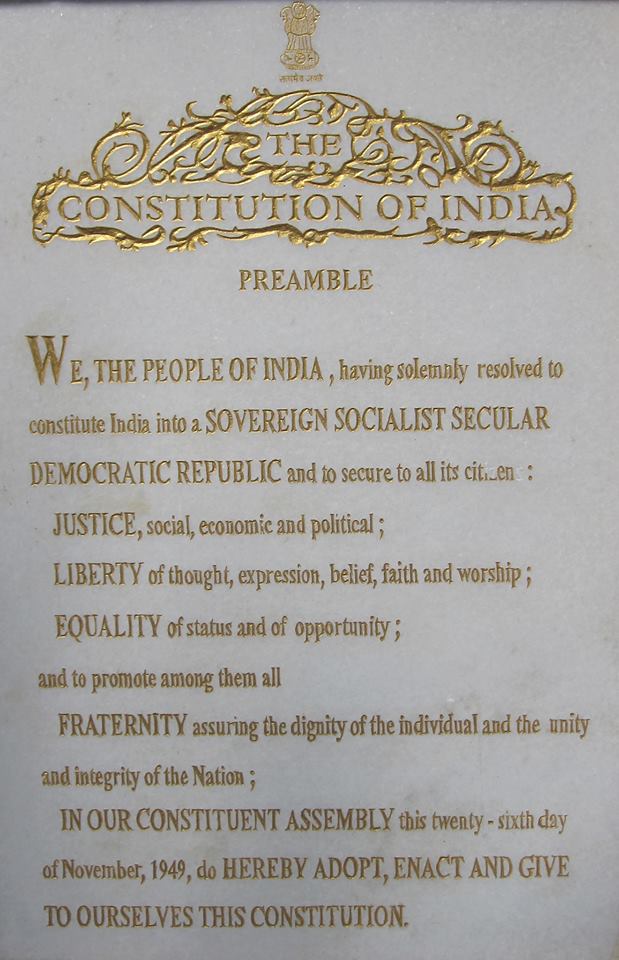
The Preamble to the Constitution of India
"WE, THE PEOPLE OF INDIA..." — secularism is written into the Constitution's very first lines, making it one of the foundations of the Republic.

A secular Constitution is "necessary but not sufficient"

The Constitution guarantees freedom of religion and bans discrimination — but laws alone can't change minds. Communal prejudices must be countered in everyday life, and religion-based mobilisation in the political arena. Secularism is a practice, not just a clause.

Data focus · Page 39

India's religious diversity, by the numbers

The Census of India records each person's religion every ten years, exactly as each person describes it — including "no religion" or "atheist". Here's the 2011 picture, and why the "minority will overtake" fear is statistically baseless.

Population by religious community, 2011

Hindu79.8%
Muslim14.2%
Christian2.3%
Sikh1.7%
Buddhist0.7%
Jain0.4%
Other religions & persuasions / not stated0.9%
The Sachar Committee finding A common but mistaken impression is that the Muslim share will overtake other communities. Expert estimates for the PM's High Level Committee (Sachar Committee) show it may rise only ~3-4% in 50 years. The overall population balance of communities is not likely to change in a big way.
Part 3 · Pages 38-43

Caste & Politics

The final division — "special to India" — has both a positive and a negative face in politics. This is the longest part of the chapter: what caste was, how it changed, how it votes, and how politics changes caste right back.

3.1

We have seen two instances of the expression of social divisions in the arena of politics, one largely positive and the other largely negative. Let us turn to our final case, that of caste and politics, that has both positive and the negative aspects.

Remember the scorecard: gender = largely positive, religion = largely negative, caste = both. This framing sentence is the skeleton of the whole chapter — use it in essay answers.

3.2

Unlike gender and religion, caste division is special to India. All societies have some kind of social inequality and some form of division of labour. In most societies, occupations are passed on from one generation to another. Caste system is an extreme form of this. What makes it different from other societies is that in this system, hereditary occupational division was sanctioned by rituals. Members of the same caste group were supposed to form a social community that practiced the same or similar occupation, married within the caste group and did not eat with members from other caste groups.

What makes caste special (unique) to India? Hereditary occupations exist everywhere — but only the caste system had them sanctioned by rituals (religiously legitimised). Three markers of the classic system: same occupation, endogamy (marrying within the caste), and commensality rules (not eating with other castes).

3.3

Caste system was based on exclusion of and discrimination against the 'outcaste' groups. They were subjected to the inhuman practice of untouchability about which you have studied in Class IX. That is why political leaders and social reformers like Jotiba Phule, Gandhiji, B.R. Ambedkar and Periyar Ramaswami Naicker advocated and worked to establish a society in which caste inequalities are absent.

The system's cruelest feature: exclusion of "outcastes" and untouchability. Meet the four giants who fought it — their names are guaranteed exam material (next panel).

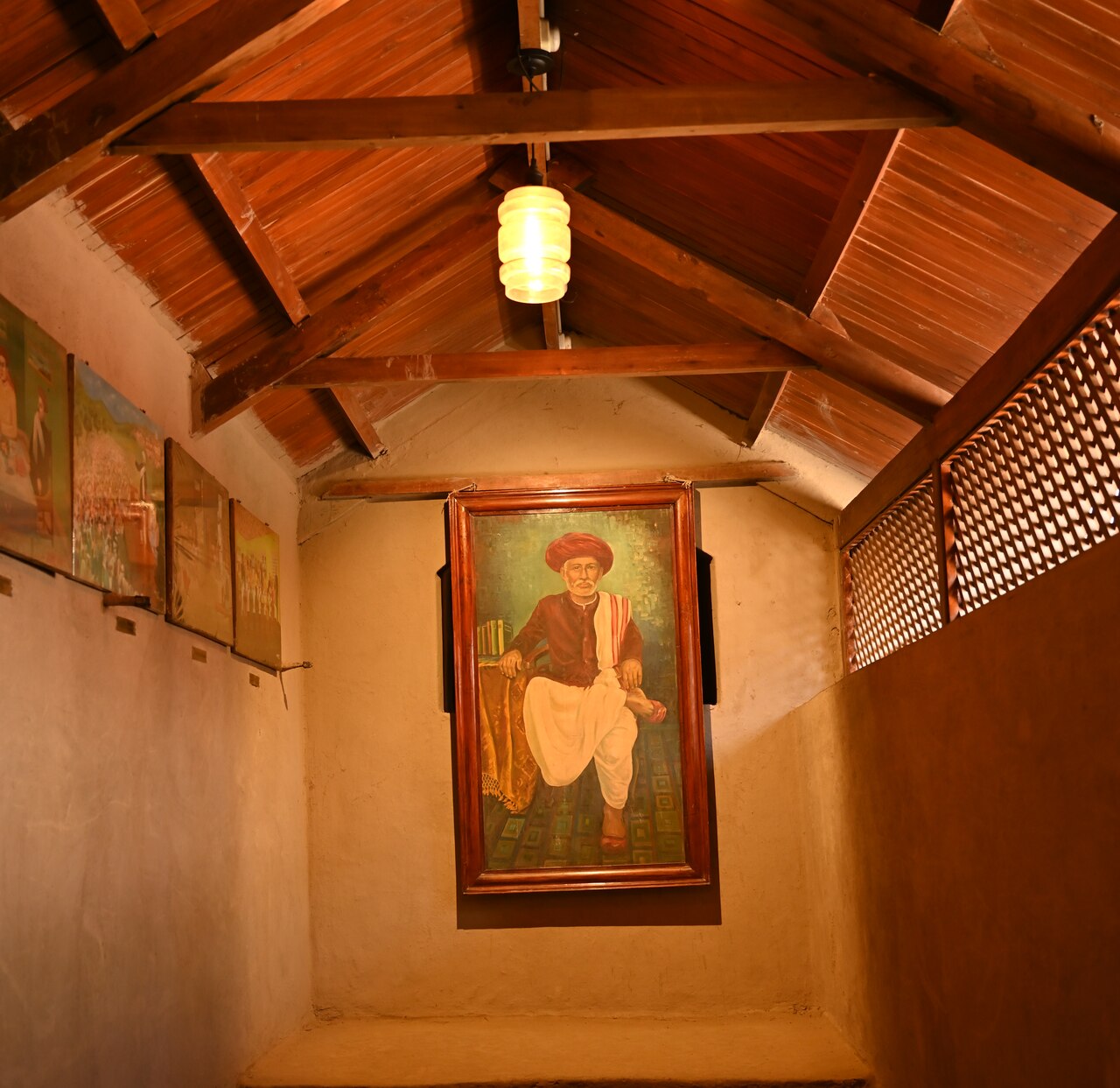
Portrait of Jyotirao Phule
Social reformer · Maharashtra

Jyotiba Phule

Pioneered schooling for girls and Dalit children; challenged upper-caste dominance and the caste order itself in the 19th century.

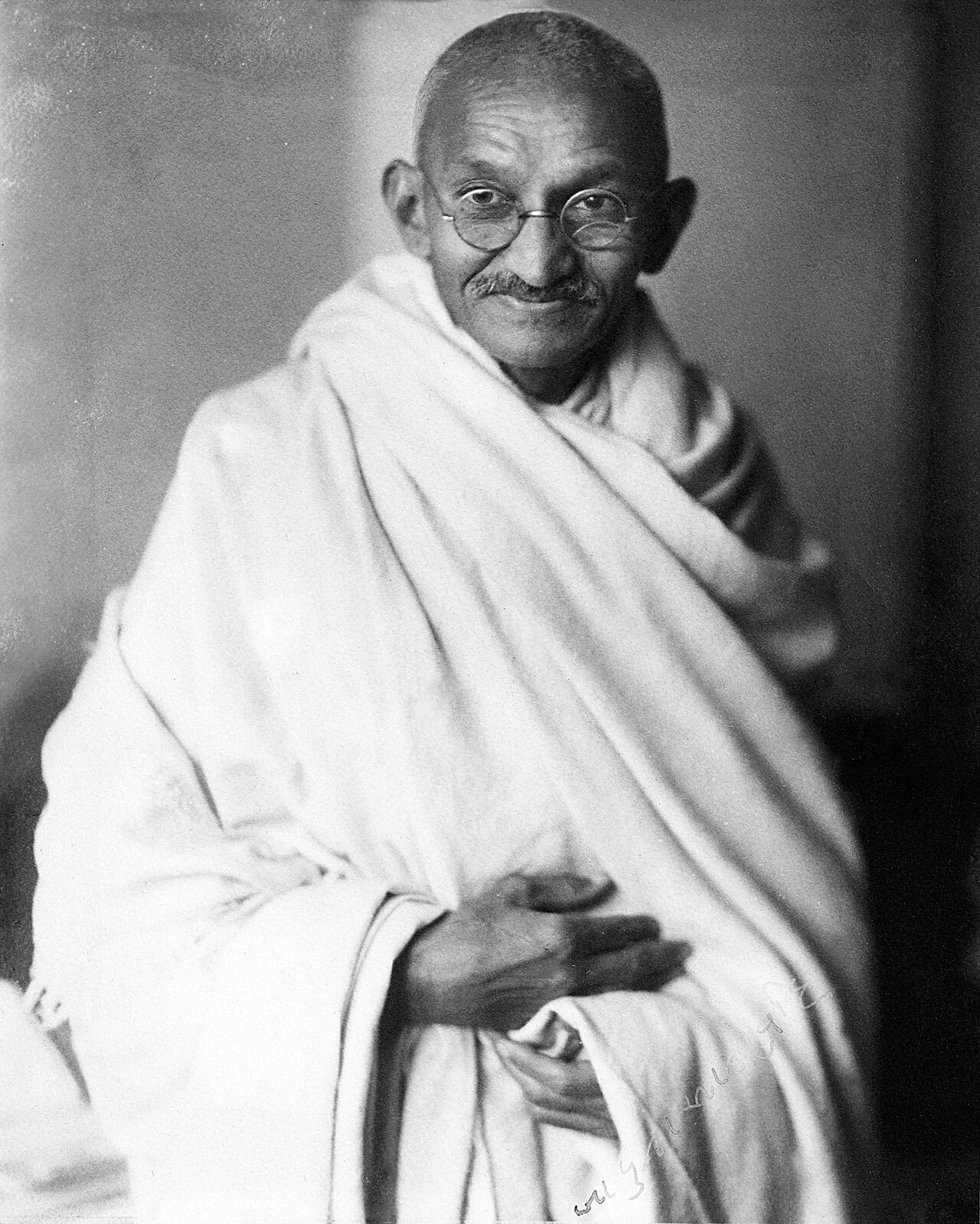
Portrait of Mahatma Gandhi
Father of the Nation

Mahatma Gandhi

Renamed "untouchables" Harijan (children of God) and made the removal of untouchability a condition of the national movement.

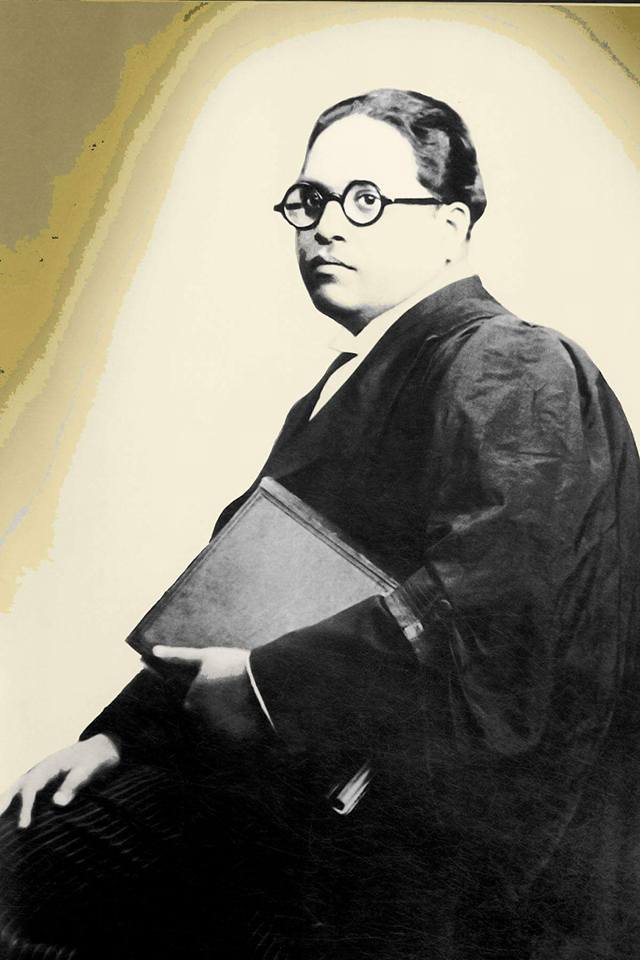
Portrait of Dr B R Ambedkar as barrister
Architect of the Constitution

Dr B.R. Ambedkar

Born an "outcaste"; led the anti-untouchability movement and drafted the Constitution that outlawed caste discrimination.

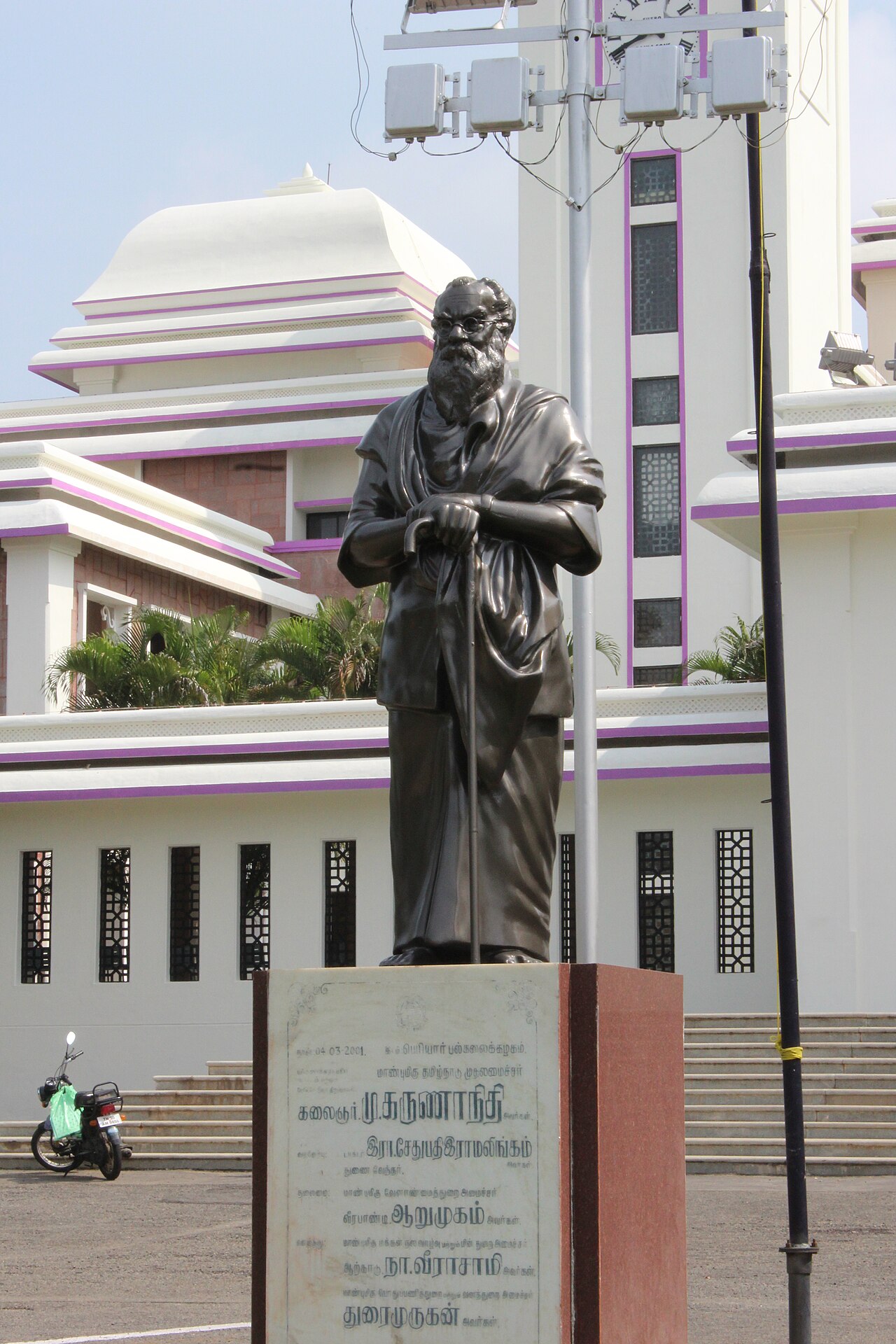
Statue of Periyar E.V. Ramasami
Rationalist leader · Tamil Nadu

Periyar Ramasami Naicker

Led the Self-Respect Movement against caste oppression and Brahminical hierarchy in South India.

3.4

Partly due to their efforts and partly due to other socio-economic changes, castes and caste system in modern India have undergone great changes. With economic development, large scale urbanisation, growth of literacy and education, occupational mobility and the weakening of the position of landlords in the villages, the old notions of caste hierarchy are breaking down. Now, most of the times, in urban areas it does not matter much who is walking along next to us on a street or eating at the next table in a restaurant. The Constitution of India prohibited any caste-based discrimination and laid the foundations of policies to reverse the injustices of the caste system. If a person who lived a century ago were to return to India, she would be greatly surprised at the change that has come about in the country.

Five forces broke the old hierarchy: economic development, urbanisation (rural→urban shift), literacy & education, occupational mobility (new generations taking new jobs) and the weakening of landlords. Add constitutional prohibition of caste discrimination — "a person from a century ago would be greatly surprised."

Caste hierarchy

A ladder-like formation in which all caste groups are placed from the 'highest' to the 'lowest' castes.

3.5

Yet caste has not disappeared from contemporary India. Some of the older aspects of caste have persisted. Even now most people marry within their own caste or tribe. Untouchability has not ended completely, despite constitutional prohibition. Effects of centuries of advantages and disadvantages continue to be felt today. The caste groups that had access to education under the old system have done very well in acquiring modern education as well. Those groups that did not have access to education or were prohibited from acquiring it have naturally lagged behind. That is why there is a disproportionately large presence of 'upper caste' among the urban middle classes in our country. Caste continues to be closely linked to economic status.

The reality check. Caste persists: endogamy (most still marry within caste), continuing untouchability, and — crucially — the centuries-long head start in education. Groups allowed to learn then dominate the urban middle class now; groups banned from learning lag. Caste today is less about ritual purity, more about accumulated advantage.

3.6

As in the case of communalism, casteism is rooted in the belief that caste is the sole basis of social community. According to this way of thinking, people belonging to the same caste belong to a natural social community and have the same interests which they do not share with anyone from another caste. As we saw in the case of communalism, such a belief is not borne out by our experience. Caste is one aspect of our experience but it is not the only relevant or the most important aspect.

Note the parallel construction with communalism: casteism = the belief that caste is the sole basis of community. Same logical flaw — a caste is not a single-minded bloc, and caste is only one identity among many.

3.7

Caste can take various forms in politics: When parties choose candidates in elections, they keep in mind the caste composition of the electorate and nominate candidates from different castes so as to muster necessary support to win elections. When governments are formed, political parties usually take care that representatives of different castes and tribes find a place in it. Political parties and candidates in elections make appeals to caste sentiment to muster support. Some political parties are known to favour some castes and are seen as their representatives. Universal adult franchise and the principle of one-person-one-vote compelled political leaders to gear up to the task of mobilising and securing political support. It also brought new consciousness among the people of castes that were hitherto treated as inferior and low.

Caste in politics — three visible forms: candidate selection mirrors the electorate's caste mix; caste-sensitive cabinet formation; and open appeals to caste sentiment. And a historic twist: universal adult franchise forced parties to court every voter — giving "low" castes political consciousness and bargaining power for the first time.

3.8

The focus on caste in politics can sometimes give an impression that elections are all about caste and nothing else. That is far from true. Just consider these: No parliamentary constituency in the country has a clear majority of one single caste. So, every candidate and party needs to win the confidence of more than one caste and community to win elections. No party wins the votes of all the voters of a caste or community. When people say that a caste is a 'vote bank' of one party, it usually means that a large proportion of the voters from that caste vote for that party. Many political parties may put up candidates from the same caste... Some voters have more than one candidate from their caste while many voters have no candidate from their caste. The ruling party and the sitting MP or MLA frequently lose elections in our country. That could not have happened if all castes and communities were frozen in their political preferences.

The chapter's most elegant counter-argument — four proofs that caste alone cannot decide elections:

Why caste alone cannot determine election results
#FactWhat it proves
1No constituency has a single-caste majorityEvery winner needs votes from several castes
2No party wins all votes of any caste"Vote bank" is loose talk — only a large proportion, never all
3Multiple candidates from the same caste; many voters have noneCaste matching doesn't decide the vote
4Ruling parties and sitting MPs/MLAs frequently losePreferences are not frozen by caste — performance matters
Exercise Q4 ready-made "State two reasons to say that caste alone cannot determine election results" — pick any two rows. Also remember what does matter: party attachment, economic interest, government performance, leader popularity.
3.9

We have so far looked at what caste does to politics. But it does not mean that there is only a one-way relation between caste and politics. Politics too influences the caste system and caste identities by bringing them into the political arena. Thus, it is not politics that gets caste-ridden, it is the caste that gets politicised. This takes several forms: Each caste group tries to become bigger by incorporating within it neighbouring castes or sub-castes which were earlier excluded from it. Various caste groups are required to enter into a coalition with other castes or communities and thus enter into a dialogue and negotiation. New kinds of caste groups have come up in the political arena like 'backward' and 'forward' caste groups.

The two-way street — quotable line: "it is not politics that gets caste-ridden, it is the caste that gets politicised." Three effects of politics on caste: castes expand by absorbing neighbours; they form coalitions requiring dialogue and negotiation; and new political categories like 'backward' and 'forward' caste blocs are born.

3.10

Thus, caste plays different kinds of roles in politics. In some situations, expression of caste differences in politics gives many disadvantaged communities the space to demand their share of power. In this sense, caste politics has helped people from Dalits and OBC castes to gain better access to decision making. Several political and non-political organisations have been demanding and agitating for an end to discrimination against particular castes, for more dignity and more access to land, resources and opportunities. At the same time, exclusive attention to caste can produce negative results as well. As in the case of religion, politics based on caste identity alone is not very healthy in a democracy. It can divert attention from other pressing issues like poverty, development and corruption. In some cases, caste division leads to tensions, conflict and even violence.

The final balance sheet. Positive: caste politics gave Dalits and OBCs a share of power, dignity, and access to land and resources. Negative: caste-only politics distracts from poverty, development and corruption — and can ignite tension, conflict, violence. The chapter ends where it began: social division in politics is a tool — its worth depends on how it's used.

Data focus · Page 41

Caste inequality today — poverty by community

The National Sample Survey shows caste is still "very strongly linked to economic status": the old hierarchy survives in who is poor, even though every caste now has both rich and poor members.

The caste–economic status relationship has changed — today you can find rich and poor in every caste. But three NSS patterns persist: average status still follows the old hierarchy; extreme poverty is much higher for the lowest castes; and the upper castes are heavily over-represented among the rich.

Population living below the poverty line, 1999-2000 (%)
Caste & community groupRuralUrbanRural poverty
Scheduled Tribes (Adivasis)45.835.6
Scheduled Castes (Dalits)35.938.3
Other Backward Classes27.029.5
Muslim Upper Castes26.834.2
Hindu Upper Castes11.79.9
Christian Upper Castes9.65.4
Sikh Upper Castes0.04.9
All Groups27.023.4

'Upper Caste' here means those not from SC, ST or OBC. Poverty line: ₹327/person/month (rural), ₹454 (urban). Source: NSSO 55th Round, 1999-2000. Bars scaled to 50%.

Read the gap Nearly 46% of rural Adivasis and 36% of rural Dalits lived below the poverty line — versus 11.7% of Hindu upper castes. Centuries of exclusion didn't vanish with one law.

Who are the Scheduled Castes, Scheduled Tribes and OBCs?

The Census counts two social groups. Scheduled Castes (Dalits) — communities previously regarded as 'outcaste', subjected to exclusion and untouchability. Scheduled Tribes (Adivasis) — communities that lived secluded in hills and forests, apart from mainstream society. Both include hundreds of castes/tribes listed in an official Schedule — hence "Scheduled". The Other Backward Classes (OBC) are not yet counted by the Census; the National Sample Survey 2004-05 estimates them at ~41%.

0%
Scheduled Castes (2011)
0%
Scheduled Tribes (2011)
0%
OBC (NSS 2004-05 est.)
The big picture SC + ST + OBC together account for about two-thirds of India's population and about three-fourths of the Hindu population.
Revision vault

Every definition, one glance

All nine glossary terms from the chapter's margins, colour-coded by theme. These exact definitions appear verbatim in board exams.

Sexual division of labourGender

A system in which all work inside the home is either done by the women of the family, or organised by them through domestic helpers.

FeministGender

A woman or a man who believes in equal rights and opportunities for women and men.

PatriarchyGender

Literally 'rule by father' — a system that values men more and gives them power over women.

Family lawsReligion

Laws dealing with family matters — marriage, divorce, adoption, inheritance. In India, different family laws apply to followers of different religions.

UrbanisationCaste

Shift of population from rural areas to urban areas.

Occupational mobilityCaste

Shift from one occupation to another, usually when a new generation takes up occupations other than those practised by their ancestors.

Caste hierarchyCaste

A ladder-like formation in which all caste groups are placed from the 'highest' to the 'lowest' castes.

CommunalismReligion

The belief that religion is the principal basis of social community — and the politics of pitting one religion's followers against another's.

Secular stateReligion

A state with no official religion, which guarantees freedom to profess, practise and propagate any religion (or none), prohibits religious discrimination, and can intervene in religion to ensure equality within communities.

Child sex ratioGender

Number of girl children per thousand boys — declined to 919 in India (Census 2011) due to sex-selective abortion.

Think like the textbook

The margin questions, answered

The NCERT cartoon-strip questions students ask aloud in the margins — answered the way the textbook wants you to think.

Yes — because politics is about power. Male dominance in the household decides who works, who rests and whose labour is counted. Wherever there is domination, it belongs in Political Science.
The direction of the division. Casteism and communalism divide society to dominate others; feminism unites the disadvantaged to remove an existing hierarchy. One creates inequality, the other dismantles it.
Because communalism threatens the very idea of India, not just religious people. Riots, partition of communities and majoritarian dominance hurt every citizen — and a secular state protects non-believers as much as believers.
Everyday prejudices and stereotypes are the "most common expression of communalism" — so common that "we often fail to notice it, even when we believe in it". Recognising the prejudice is the first step to unlearning it.
No — as the textbook replies: "Will caste disappear if we keep mum about it?" Wherever there is domination, we should discuss it in Political Science. Silence protects the hierarchy, not its victims.
Largely no. A "vote bank" only means a large proportion of a caste votes one way — never all of it. Treating castes as fixed blocs ignores class, gender, performance and party loyalty — the very reasons sitting MPs and ruling parties keep losing.
Pages 44-45 · All 12 questions

NCERT exercise solutions

Complete answers to every end-of-chapter question — written the way CBSE markers want them: definition first, then points, then examples.

Q 1

Mention different aspects of life in which women are discriminated or disadvantaged in India.

5 MARKS
  • Education: female literacy is only 54% against 76% for men; fewer girls enter higher studies as parents invest more in sons' education.
  • Work & pay: women work one hour more per day on average, yet are paid less than men for the same work despite the Equal Remuneration Act, 1976; their housework is unpaid and unrecognised.
  • Child sex ratio: son preference and sex-selective abortion have lowered the child sex ratio to 919 girls per 1000 boys (Census 2011) — below 850/800 in some states.
  • Safety: harassment, exploitation and violence — urban areas are particularly unsafe, and domestic violence continues inside homes.
Q 2

State different forms of communal politics with one example each.

5 MARKS
  • Everyday beliefs: religious prejudices and stereotypes — e.g. believing one religion is superior.
  • Quest for dominance: majority communalism seeks majoritarian dominance; minority communalism seeks a separate political unit.
  • Political mobilisation on religious lines: using sacred symbols, religious leaders and emotional appeal to gather voters of one religion.
  • Communal violence: riots and massacre — e.g. the Partition-era riots in India and Pakistan.
Q 3

State how caste inequalities are still continuing in India.

5 MARKS
  • Most people still marry within their own caste or tribe.
  • Untouchability has not ended completely despite constitutional prohibition.
  • Centuries of advantage and disadvantage persist: groups historically allowed education dominate the urban middle class; those denied it lag behind.
  • Caste remains closely linked to economic status — average economic status still follows the old hierarchy; poverty is highest among Dalits and Adivasis, lowest among upper castes (NSS data).
Q 4

State two reasons to say that caste alone cannot determine election results in India.

3 MARKS
  • No parliamentary constituency has a clear majority of a single caste — every candidate must win support across several castes and communities.
  • No party wins all the votes of any one caste — and ruling parties/sitting MPs & MLAs frequently lose, which would be impossible if caste preferences were frozen.
Q 5

What is the status of women's representation in India's legislative bodies?

3 MARKS
  • Women's share in the Lok Sabha first touched 14.36% in 2019; in state assemblies it is below 5% — placing India in the world's bottom group, behind several African and Latin American countries.
  • One-third of seats in panchayats and municipalities are reserved for women — over 10 lakh elected women representatives.
  • The Nari Shakti Vandan Adhiniyam, 2023 now provides 33% reservation in the Lok Sabha, State Assemblies and the Delhi Assembly.
Q 6

Mention any two constitutional provisions that make India a secular state.

3 MARKS
  • There is no official religion for the Indian state — no faith is given special status.
  • The Constitution grants all persons freedom to profess, practise and propagate any religion — or none, and prohibits discrimination on grounds of religion.
Q 7

When we speak of gender divisions, we usually refer to:

MCQ

(b) Unequal roles assigned by the society to men and women. Gender division rests on social expectations and stereotypes — not biology.

Q 8

In India seats are reserved for women in:

MCQ

(d) Panchayati Raj bodies. One-third of seats in panchayats and municipalities are reserved for women.

Q 9

Communal politics is based on the belief that... (which statements are correct?)

MCQ

(c) A and C — one religion is superior to others (A), and followers of a particular religion constitute one community (C). Statements B and D describe secular, equal coexistence.

Q 10

Which among the following statements about India's Constitution is wrong?

MCQ

(b) It gives official status to one religion. India's Constitution gives no religion special status — that is the core of Indian secularism.

Q 11

Social divisions based on _________ are peculiar to India.

FILL IN

Caste. Caste division — hereditary occupational division sanctioned by rituals — is special to India.

Q 12

Match List I with List II (feminist, communalist, castiest, secularist).

MCQ
  • 1. Believes in equal rights for women and men → B. Feminist
  • 2. Says religion is the principal basis of community → A. Communalist
  • 3. Thinks caste is the principal basis of community → D. Castiest
  • 4. Does not discriminate on the basis of religious beliefs → C. Secularist

Correct option: (a) B C A D as printed in NCERT (1-B, 2-A, 3-D, 4-C).

Final boss

Test yourself: the 200-question machine

A bank of 200+ questions covering every line of the chapter. Every round is drawn at random — questions shuffled, options shuffled — so no two attempts are ever the same. Instant feedback with full explanations.

Round length
Question 1 / 10 0 streak

0/10

Revise the chapter
One-line summary

Social diversity doesn't threaten democracy —
it's democracy's raw material.

Gender politics won women the vote, laws and legislated seats. Religious politics, when communal, threatens the very idea of India. Caste politics does both. The exam answer — and the life lesson — is knowing the difference.